

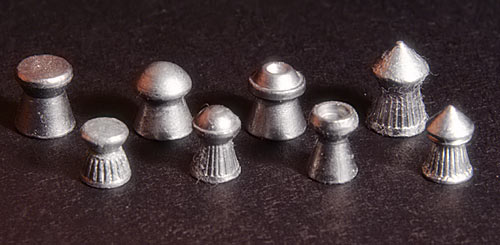
 Here at Surplus Store, we have a number of air pistols online, which will use different calibres of ammunition, as well as different varieties of these calibres. Below, we have taken a look at the different calibres and variations of these to try and help you to make a decision of which ammo you would want to use in your air pistol or air rifle:
.177 Calibre
.177 is the more popular calibre out of the two, and is also slightly smaller. Because of this, it is fired at a higher velocity, which results in a flatter trajectory. If the trajectory of the pellet is flatter, it will result in higher accuracy shooting at longer distances.
Current air rifles can reach velocities of between 1000 – 1250 FPS for those that require a FAC, with most non certificated rifles topping out at about 800 FPS. If you are looking to take part in target shooting, or small pest control, the .177 is probably going to be the best choice. With a wide range of .177’s, you will also be spoilt for choice!
.22 Calibre
The .22 calibre pellets have a large increase in both weight and size over the .177, which means it has the highest knockdown power of the two. However, this means that the .22 does not have the range capabilities of the .177, and is most effective at a distance of around 45-50 yards, depending on which brand of pellet you use. The .22 is better for larger pest control, due to the increased stopping power.
.20 Calibre
The .20 is more common in America, but Europe has started to produce more of them recently. Currently, there is a smaller choice of .20 rifles available on the market, although there are many shooters who consider the .20 calibre to be a good compromise between the .177 and the .22, and hold their own in distance shooting against the .22. They are ideal for general shooting, or for small pest control.
.25 Calibre
Many shooters state that “bigger is better”, with the .25 being the largest calibre of the four. When it was first created, the .25 was being fired from low powered air rifles, where velocities were between 300 to 400 FPS. It wasn’t until the creation of higher powered rifles where the .25 started to show its worth as a calibre, if you were after heavier ammo. The weight of the ammo does make it more difficult at longer distances, but it is formidable at short distances, as long as the rifle can handle it!
The next choice you have is to decide what type of pellet you will use with your air rifle. Again, we have taken a look at the different types below:
Pointed Head
Pointed pellets are designed for maximum penetration within lower and medium powered airguns, but not so well in the higher powered airguns. The lower velocities of the .22 rifle tend to suit pointed pellets better if you are looking for closer groupings with your shots.
Rounded Head
These are great for all-round shooting, due to their aerodynamic properties. They travel through the wind more effectively, and they offer a higher knockdown power than their pointed counterparts. This aerodynamic shape also means they are the best choice for the higher powered rifles, as they are harder hitting in delivery, and will group better at longer distances as well.
Hollow Point
Hollow point pellets allow for maximum impact from all airguns, as it allows for expansion when it hits the target, as long as sufficient velocity is reached. This tends to happen more often in medium and high powered airguns. The downside to hollow point is the fact that due to their hollow nose, they do not group well at longer distances. This is because they tend to get carried more easily by the wind, moving them off course. These pellets are best used at a distance of 20 feet or under.
Wadcutter
The Wadcutter, or flat head pellet has long been thought of as being the most accurate pellet design available, and was used for many years exclusively in target shooting competition. However, recent pointed designs have since challenged this notion. The pellets are lightweight, gain maximum velocities, and are usually the pellet of choice for test-firings at factories. The wadcutter is formidable at distances of around 30 feet, and are as effective and efficient as hollowpoints at this range. The flat face cuts a sharp hole in targets, therefore are much more accurate to score in competition. These are ideal for small game, but can lose their accuracy at longer distances, so are suggested for targets under 30 feet.
Photo courtesy of Liftarn, under Creative Commons
Here at Surplus Store, we have a number of air pistols online, which will use different calibres of ammunition, as well as different varieties of these calibres. Below, we have taken a look at the different calibres and variations of these to try and help you to make a decision of which ammo you would want to use in your air pistol or air rifle:
.177 Calibre
.177 is the more popular calibre out of the two, and is also slightly smaller. Because of this, it is fired at a higher velocity, which results in a flatter trajectory. If the trajectory of the pellet is flatter, it will result in higher accuracy shooting at longer distances.
Current air rifles can reach velocities of between 1000 – 1250 FPS for those that require a FAC, with most non certificated rifles topping out at about 800 FPS. If you are looking to take part in target shooting, or small pest control, the .177 is probably going to be the best choice. With a wide range of .177’s, you will also be spoilt for choice!
.22 Calibre
The .22 calibre pellets have a large increase in both weight and size over the .177, which means it has the highest knockdown power of the two. However, this means that the .22 does not have the range capabilities of the .177, and is most effective at a distance of around 45-50 yards, depending on which brand of pellet you use. The .22 is better for larger pest control, due to the increased stopping power.
.20 Calibre
The .20 is more common in America, but Europe has started to produce more of them recently. Currently, there is a smaller choice of .20 rifles available on the market, although there are many shooters who consider the .20 calibre to be a good compromise between the .177 and the .22, and hold their own in distance shooting against the .22. They are ideal for general shooting, or for small pest control.
.25 Calibre
Many shooters state that “bigger is better”, with the .25 being the largest calibre of the four. When it was first created, the .25 was being fired from low powered air rifles, where velocities were between 300 to 400 FPS. It wasn’t until the creation of higher powered rifles where the .25 started to show its worth as a calibre, if you were after heavier ammo. The weight of the ammo does make it more difficult at longer distances, but it is formidable at short distances, as long as the rifle can handle it!
The next choice you have is to decide what type of pellet you will use with your air rifle. Again, we have taken a look at the different types below:
Pointed Head
Pointed pellets are designed for maximum penetration within lower and medium powered airguns, but not so well in the higher powered airguns. The lower velocities of the .22 rifle tend to suit pointed pellets better if you are looking for closer groupings with your shots.
Rounded Head
These are great for all-round shooting, due to their aerodynamic properties. They travel through the wind more effectively, and they offer a higher knockdown power than their pointed counterparts. This aerodynamic shape also means they are the best choice for the higher powered rifles, as they are harder hitting in delivery, and will group better at longer distances as well.
Hollow Point
Hollow point pellets allow for maximum impact from all airguns, as it allows for expansion when it hits the target, as long as sufficient velocity is reached. This tends to happen more often in medium and high powered airguns. The downside to hollow point is the fact that due to their hollow nose, they do not group well at longer distances. This is because they tend to get carried more easily by the wind, moving them off course. These pellets are best used at a distance of 20 feet or under.
Wadcutter
The Wadcutter, or flat head pellet has long been thought of as being the most accurate pellet design available, and was used for many years exclusively in target shooting competition. However, recent pointed designs have since challenged this notion. The pellets are lightweight, gain maximum velocities, and are usually the pellet of choice for test-firings at factories. The wadcutter is formidable at distances of around 30 feet, and are as effective and efficient as hollowpoints at this range. The flat face cuts a sharp hole in targets, therefore are much more accurate to score in competition. These are ideal for small game, but can lose their accuracy at longer distances, so are suggested for targets under 30 feet.
Photo courtesy of Liftarn, under Creative Commons 
Which calibre and what type of pellet is right for you?
Search
Recent Comments
- Ben Austin on Our Airsoft & Air Gun Repair Services
- Dan K on Our Airsoft & Air Gun Repair Services
- Dan K on Brand Profile: AGM
- David Robinson on Our Airsoft & Air Gun Repair Services
- Steve on Brand Profile: AGM
Archives
- August 2026
- July 2026
- June 2026
- May 2026
- April 2026
- March 2026
- January 2026
- December 2025
- November 2025
- October 2025
- September 2025
- August 2025
- July 2025
- June 2025
- May 2025
- April 2025
- March 2025
- February 2025
- January 2025
- November 2024
- August 2024
- June 2024
- May 2024
- April 2024
- March 2024
- February 2024
- January 2024
- November 2023
- October 2023
- September 2023
- August 2023
- July 2023
- June 2023
- May 2023
- April 2023
- March 2023
- February 2023
- January 2023
- December 2022
- November 2022
- September 2022
- August 2022
- July 2022
- June 2022
- May 2022
- April 2022
- March 2022
- February 2022
- December 2021
- November 2021
- October 2021
- July 2021
- June 2021
- May 2021
- April 2021
- March 2021
- February 2021
- January 2021
- December 2020
- November 2020
- October 2020
- September 2020
- August 2020
- July 2020
- June 2020
- May 2020
- April 2020
- March 2020
- February 2020
- January 2020
- December 2019
- November 2019
- October 2019
- September 2019
- August 2019
- July 2019
- June 2019
- May 2019
- April 2019
- March 2019
- February 2019
- January 2019
- December 2018
- November 2018
- October 2018
- September 2018
- August 2018
- July 2018
- June 2018
- May 2018
- April 2018
- March 2018
- February 2018
- January 2018
- December 2017
- November 2017
- October 2017
- September 2017
- August 2017
- July 2017
- June 2017
- May 2017
- April 2017
- March 2017
- February 2017
- January 2017
- December 2016
- November 2016
- October 2016
- September 2016
- August 2016
- July 2016
- June 2016
- May 2016
- April 2016
- March 2016
- February 2016
- January 2016
- December 2015
- November 2015
- October 2015
- September 2015
- August 2015
- July 2015
- June 2015
- May 2015
- April 2015
- March 2015
- February 2015
- January 2015
- December 2014
- November 2014
- October 2014
- September 2014
Categories
- Air Guns (114)
- Air Pistol (60)
- Air Rifle (103)
- Airsoft (274)
- Ammunition (15)
- Archery (10)
- Clothing & Body Armour (30)
- Equipment & Accessories (25)
- Events (22)
- Gaming (18)
- Grenades (3)
- History (92)
- Knives (31)
- Military (113)
- Paintball (4)
- Replica Guns (17)
- Survival (33)
- Target Shooting (22)
- TV, Film & Pop Culture (59)
- Uncategorized
- Video (26)
Here at Surplus Store, we have a number of air pistols online, which will use different calibres of ammunition, as well as different varieties of these calibres. Below, we have taken a look at the different calibres and variations of these to try and help you to make a decision of which ammo you would want to use in your air pistol or air rifle:
.177 Calibre
.177 is the more popular calibre out of the two, and is also slightly smaller. Because of this, it is fired at a higher velocity, which results in a flatter trajectory. If the trajectory of the pellet is flatter, it will result in higher accuracy shooting at longer distances.
Current air rifles can reach velocities of between 1000 – 1250 FPS for those that require a FAC, with most non certificated rifles topping out at about 800 FPS. If you are looking to take part in target shooting, or small pest control, the .177 is probably going to be the best choice. With a wide range of .177’s, you will also be spoilt for choice!
.22 Calibre
The .22 calibre pellets have a large increase in both weight and size over the .177, which means it has the highest knockdown power of the two. However, this means that the .22 does not have the range capabilities of the .177, and is most effective at a distance of around 45-50 yards, depending on which brand of pellet you use. The .22 is better for larger pest control, due to the increased stopping power.
.20 Calibre
The .20 is more common in America, but Europe has started to produce more of them recently. Currently, there is a smaller choice of .20 rifles available on the market, although there are many shooters who consider the .20 calibre to be a good compromise between the .177 and the .22, and hold their own in distance shooting against the .22. They are ideal for general shooting, or for small pest control.
.25 Calibre
Many shooters state that “bigger is better”, with the .25 being the largest calibre of the four. When it was first created, the .25 was being fired from low powered air rifles, where velocities were between 300 to 400 FPS. It wasn’t until the creation of higher powered rifles where the .25 started to show its worth as a calibre, if you were after heavier ammo. The weight of the ammo does make it more difficult at longer distances, but it is formidable at short distances, as long as the rifle can handle it!
The next choice you have is to decide what type of pellet you will use with your air rifle. Again, we have taken a look at the different types below:
Pointed Head
Pointed pellets are designed for maximum penetration within lower and medium powered airguns, but not so well in the higher powered airguns. The lower velocities of the .22 rifle tend to suit pointed pellets better if you are looking for closer groupings with your shots.
Rounded Head
These are great for all-round shooting, due to their aerodynamic properties. They travel through the wind more effectively, and they offer a higher knockdown power than their pointed counterparts. This aerodynamic shape also means they are the best choice for the higher powered rifles, as they are harder hitting in delivery, and will group better at longer distances as well.
Hollow Point
Hollow point pellets allow for maximum impact from all airguns, as it allows for expansion when it hits the target, as long as sufficient velocity is reached. This tends to happen more often in medium and high powered airguns. The downside to hollow point is the fact that due to their hollow nose, they do not group well at longer distances. This is because they tend to get carried more easily by the wind, moving them off course. These pellets are best used at a distance of 20 feet or under.
Wadcutter
The Wadcutter, or flat head pellet has long been thought of as being the most accurate pellet design available, and was used for many years exclusively in target shooting competition. However, recent pointed designs have since challenged this notion. The pellets are lightweight, gain maximum velocities, and are usually the pellet of choice for test-firings at factories. The wadcutter is formidable at distances of around 30 feet, and are as effective and efficient as hollowpoints at this range. The flat face cuts a sharp hole in targets, therefore are much more accurate to score in competition. These are ideal for small game, but can lose their accuracy at longer distances, so are suggested for targets under 30 feet.
Photo courtesy of Liftarn, under Creative Commons