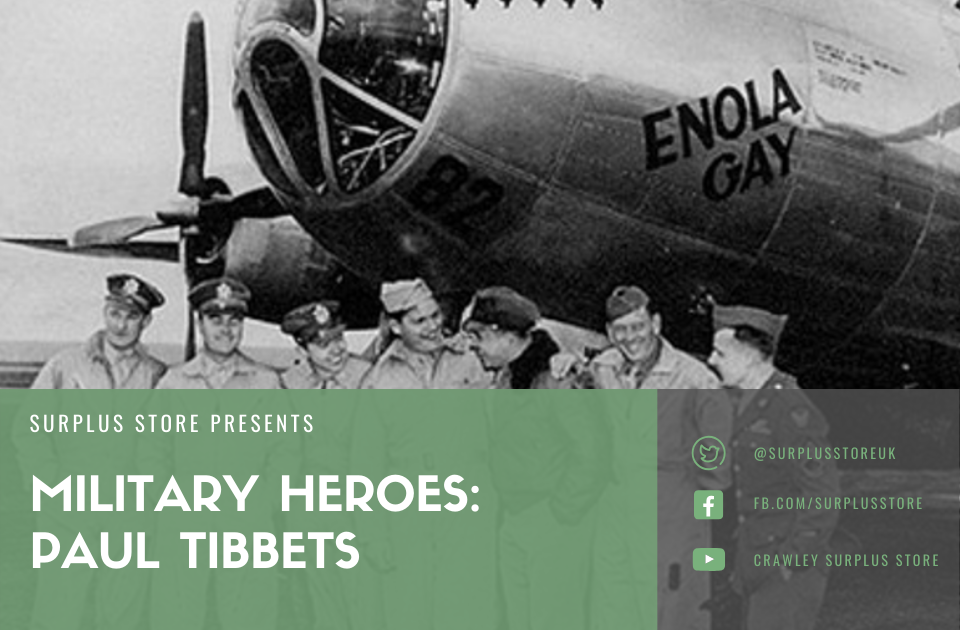
In this instalment of our military heroes series, we look at the life of
Paul Tibbets. A name not known by many, but a man who changed the very course of history with his actions. Seen by many as a hero, but also as evil by others, Tibbets appears in the history books for a singular achievement; being the
pilot of the 'Enola Gay'; the plane that
dropped the first atomic bomb, on the city of Hiroshima.
Knowing full well that his actions would change the course of the world’s future, this pressure alone is enough to make Tibbets a
notable figure in modern history, wherever you stand on the use of nuclear weapons. The risk and uncertainty that faced him and his crew on the famed flight are like nothing we could imagine, and hopefully, something that will never be faced again.
Read on to find out more about this notable figure and how he came to be at the controls of one of the
most significant flights in history.
Early Life of Paul Tibbets
Paul was born on the 23rd February 1915 in Quincy, Illinois, to parents Paul Warfield Tibbets Sr and Enola Gay Tibbets (makes sense now, right?). His family moved around a lot during his early life, first to Davenport, Iowa, then to Des Moines. They eventually settled in Hialeah, Florida to enjoy the warmer weather and escape the cold winters. Perhaps one of the
deciding factors that contributed to him becoming a pilot was flying in a plane piloted by barnstormer Doug Davis, while his family were living in Florida.
Unfortunately, the Tibbets’ time in Florida was cut short due to business difficulties with his father,
forcing them to return to Alton, Illinois, where
Paul Tibbets Jr graduated from Western Military Academy in 1933. He then attended the University of Florida and
took private flying lessons with Rusty Heard at the Opa-Locka Airport in Miami. Although
initially planning to become a doctor, Tibbets changed his mind after completing a year and a half of pre-med studies at the University of Cincinnati. He decided to join the United States Army, to
become a pilot in the US Army Air Corps.
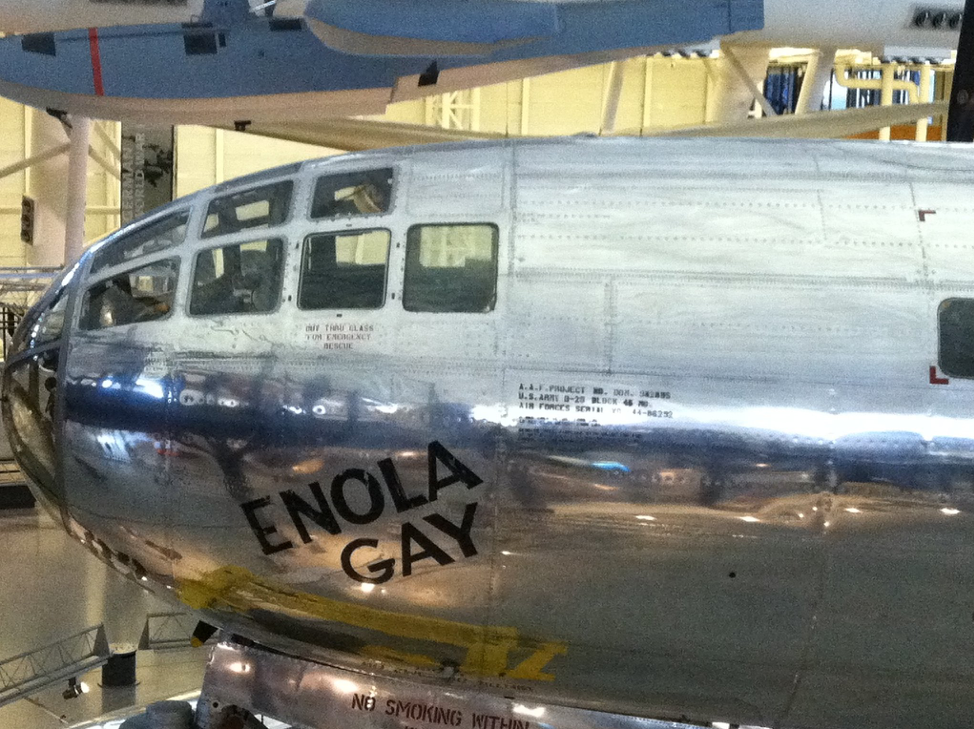
Image Source:
Mrs. Gemstone
Early Military Career
Due to his prior educational experience,
Tibbets qualified for the Aviation Cadet Training Program. After being enlisted at Fort Thomas in Kentucky and being sent to Randolph Field in Texas, Tibbets showed himself to be an
above-average pilot during his initial training. This aptitude to aviation saw him
commissioned as a second lieutenant, receiving his pilot rating in 1938.
The Second World War
During the first couple years of the war,
Tibbets was stationed at Fort Benning where he served as a
personal pilot to Brigadier General George S. Patton Jr. Tibbets then transferred to Hunter Field in Georgia acting as an engineering officer and flying the A-20 Havoc aircraft. During his time at the base, he was
promoted to the position of Captain.
At the start of 1942, Paul Tibbets reported for duty with the 29th Bombardment Group acting as its
engineering officer. Three weeks later, he continued his ascent through the ranks after being named a
commanding officer and being equipped with a
Boeing B-17D. Tibbets was the commanding officer of the first bombardment group to be deployed to England. However, due to the lack of experience and knowledge that his team had, intensive training was run by Colonel Frank A. Armstrong, who duly
appointed Tibbets his deputy.
The first American daylight heavy bomber mission took place on 17th August 1942, with
Tibbets flying the aircraft 'Butcher Shop'. Just a couple of months later, Tibbets led the first American raid of more than 100 bombers in Europe, with the prime target being industrial facilities in the city of Lille, France. Unfortunately,
poor bombing accuracy resulted in far less damage being done to the targets and
far more civilian casualties than planned. Of the 108 aircraft, 33 were either shot down or had to return to base due to mechanical issues.
This mission gave Tibbets his first experience of mass civilian casualties, which was met with mixed feelings on his part. Although initially feeling guilty, he reasoned with himself that this was simply his task and he was
not to associate himself with the morality of dropping bombs. Tibbets continued to fly missions over France, completing 25 during his time based in England. After this, the 97th Bomb Group, which Tibbets was a part of, was
transferred to North Africa to carry out further aerial operations.
War Against Japan
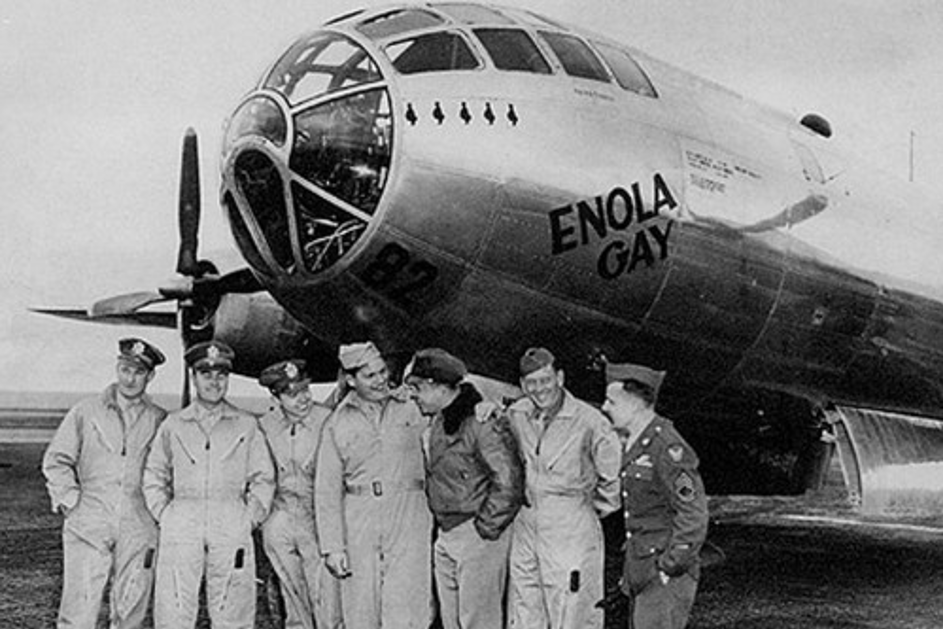
Image Source:
Ur Cameras
When the chief of the US Army Air Forces requested an experienced bombardment pilot to assist in the development of a new aircraft called the Boeing B-29 Superfortress bomber,
Tibbets was recommended by his then Major General Jimmy Doolittle. Tibbets was transferred back to the states in February 1943 to help with the program after the previous chief test pilot had been killed in the crash of a prototype aircraft.
Tibbets began to accumulate the most amount of flight time in this aircraft than any other pilot, essentially learning the machine like the back of his hand. He also made design suggestions,
proposing that the craft be stripped of its armour plating, thereby reducing the overall weight by 3,200KG, much improving its overall performance.
With this experience under his belt, Tibbets was
transferred to Grand Island Army Air Field in Nebraska to serve as director of operations and to assist pilots in the transition from flying regular bomber aircraft to B-29s, a much larger machine than had previously been used. Additionally, in late 1944,
Tibbets met with Major General Uzal Ent and three representatives from the Manhattan Project, the team that was responsible for creating the nuclear bombs used in WW2.
The Atomic Bomb
Tibbets was put in charge of
509th Composite Group and offered the choice of three bases, from which he chose Wendover in Utah due to its remoteness. Although, Tibbets was not the first choice when it came to flying the mission on 6th August 1945; instead, this was a man named
Colonel Roscoe C. Wilson. Wilson was the Air Force project officer who had worked closely with the Manhattan Project, although no previous combat experience made him an unlikely pick.
During the months of April and May, teams worked to
transport components of the atomic bomb from the mainland USA to the Mariana Islands in the North Pacific Ocean. This would provide the takeoff point for the 'Enola Gay', shortening the journey to roughly 6 hours to Japan.
On the
5th August 1945, Tibbets named his aircraft the 'Enola Gay', after his mother. Robert A. Lewis was the aircraft commander regularly assigned to bombing missions, however, was unhappy when he was replaced by Tibbets. Not to help matters, Tibbets had decided to paint the now-iconic nose art onto the craft, infuriating Lewis further, who ended up flying as co-pilot on the mission the following day.

On the morning of the 6th, at 2:45 am, the
'Enola Gay' took off for Hiroshima, a 2,000-mile and six-hour journey. The bomb was dropped at 8:15 am, detonating at just under 2,000 feet to ensure maximum damage to the surrounding area. If detonated at floor level, buildings and structures would have limited the blast, therefore detonating at altitude was the chosen option.
The immediate impact of the bomb being dropped was widely felt, with
Tibbets immediately becoming a celebrity in his own country and being awarded the
Distinguished Service Cross after landing his plane. He was seen many Americans as a national hero, someone who was putting a stop to the war against Japan.
Post War Career
Tibbets was not recalled for the second nuclear bomb dropping. After the war ended, he attended and graduated from Air Command and Staff School in Alabama, then moved to a role at the Pentagon. He worked on the
B-47 Stratojet program and subsequently became a project officer at Boeing.
Tibbets held numerous military roles in the following years, working for the
Allied Air Forces in Central Europe, being based in France and also being the commander of the 6th Air Division, based in Florida. He finally retired from the United States Air Force in 1966.
Paul Tibbets Jr died on 1st November 2007, aged 92, due to ill health. As per his request, a headstone was never created, and after being cremated, his
ashes were scattered over the English Channel.
It is hard to say for sure whether Paul Tibbets’ actions were for the greater good. They were an extreme means to an end, and we hope we don’t have to see anything like this in the future.
If you’re looking to learn more about some of the most important figures from World War Two, check out our articles on
Barnes Wallis and
Alan Turing. You can also find WWII replica
airsoft rifles on our store here.


