Outdoor enthusiasts will know how much more enjoyable and fulfilling camping or bushcraft activities can be when you have the right tools on hand. An outdoor survival or Bear Grylls knife is one of those invaluable tools that can help with countless tasks out in the wilderness.
But with so many knives out there claiming to support all your wilderness pursuits, how can you be sure which knife is right for you? We consider what you should look for when in the market for an outdoor knife.
What is a Survival Knife?
Survival knives are designed for use in outdoor and survival situations. They must be reliable and versatile, ensuring you can perform various tasks, from basic wilderness skills to emergency survival.
What Should a Survival Knife Do?
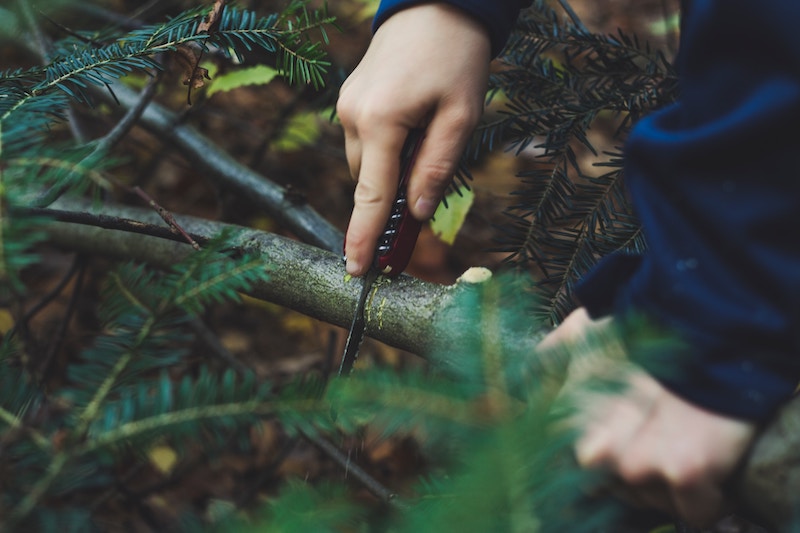
A good survival knife will be one of your most useful tools when heading out to the wilderness. Their versatility means they can help with:
- - Preparing food
- - Opening cans
- - Building shelters
- - Making other tools
- - First aid
- - Fire-making
- - Digging
- - Hammering
These are just a few of the basics that the right knife should be able to support you with – with a bit of creativity and initiative, an outdoor knife can help in a range of survival situations.
What are the Qualities of a Good Survival Knife?
When looking for a knife that’ll perform well, you should look out for a few key qualities:
- - A comfortable, durable grip and solid pommel: A comfortable handle will be much easier to hold for longer periods. A solid pommel also ensures you can more effectively use this part of the knife for hammering.
- - The perfect knife size and shape: Survival knives are all about versatility, so you don’t want something too big , too small or too specialised that’ll end up preventing you from doing other tasks.
- - A fixed blade: A knife with a fixed blade is more durable – the absence of weak points ensures it’ll hold up in a range of scenarios.
- - A full tang: Knives with ‘full tang’ are made of one continuous piece of metal from the blade through the handle, resulting in a stronger, more robust design.
- - A good sheath: Your knife should be compatible with a solid sheath that ensures your own safety and the maintenance of the knife.

The Blade
Outdoor survival knives are made from steel, with a few options to choose from:
- - Stainless steel: These knives are corrosion-resistant but may be slightly harder to sharpen. They’re ideal for use in humid/wet environments as they won’t rust as easily.
- - Carbon steel: These knives are durable but more prone to corrosion. They’re ideal for cutting wood and doing more hard-wearing tasks.
The size of your blade should strike a happy medium; neither being too long for more delicate tasks or too small for things like chopping. A good size for your survival knife is around 9-11 inches (including the handle). This will depend on personal preference but provides a helpful baseline.
Ideally, your knife should end with a pointed tip. This might sound obvious, but some knives will have hooked or rounded ends. This pointed end allows for even more functionality, as you can use it as a makeshift screwdriver or attach it to a pole to create a spear.
Another thing to look out for is the edges of the knife. You don’t really need a double-edge knife – in fact, it can be beneficial to opt for a single-edged blade with a flat spine. A flat spine is great for striking fire-starters or can be used to rest your thumb for added control when cutting.
The decision between a straight-edge or serrated-edge knife mostly comes down to preference, although a straight-edge blade is generally more versatile and is easier to sharpen, so may be the preferable option.
The Handle
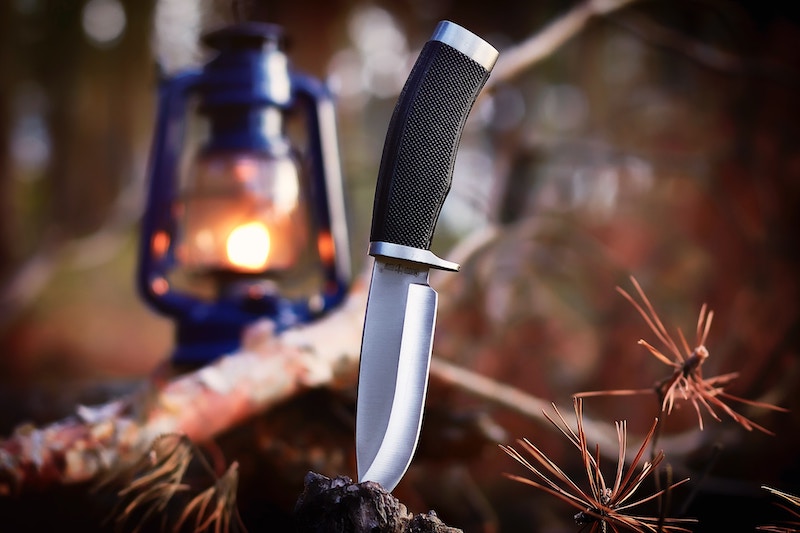
The handle’s main job is to offer a comfortable grip in various scenarios out in the wild – you don’t want anything that’s too tough on bare hands but still want to be able to grip it in the rain.
Various materials are used for knife handles, including things like micarta, rubber, resin and wood. Handles with a base of micarta or rubber are the most common, thanks to their durability and good level of grip.
The bottom of the knife’s handle (the pommel) should be robust and able to withstand some force. This way, it can double up as a hammer, ideal for when you’re putting up shelter.
The Sheath
Many survival knives come with sheaths specifically made for them; if your chosen knife doesn’t, it is well worth getting one. Sheath knives fit in purpose-made pockets that protect the blade and ensure the safety of the person carrying it. Ultimately, sheaths make transporting and storing your knife much easier.
They are typically made out of leather or nylon and are available in countless styles and designs. Many sheaths will have an attachment to allow you to fasten it to your belt or back, adding an extra level of convenience.
What to Look Out For When Buying an Outdoor Knife
So, at a glance, here’s what you should look for when buying a survival knife:
- - A knife that’s around 9-11 inches in length
- - A full-tang blade
- - A knife with a pointed tip
- - A single-edged blade with a flat spine
- - A straight-edge blade
- - A knife handle with good grip
- - A knife handle with a robust pommel
- - A decent sheath that protects the knife and ensures your safety
Some of the points here might be less applicable to you and how you intend to use your outdoor knife, so use your judgement.
Hopefully, we’ve pointed you in the right direction when it comes to choosing a survival knife that suits you. Explore our wide range of outdoor knives, including premium hunting knives, to complete your outdoor survival kit.